



What to do/see
Territory
Grammichele, together with Caltagirone, Castel di Iudica, Licodia Eubea, Mazzarrone, Militello in Val di Catania, Mirebella Imbaccari, Mineo, Palagonia, Raddusa, Ramacca, San Cono, San Michele di Ganzaria, Scordia and Vizzini, is one of the 15 municipalities in the area of the Calatino Sud Simeto district, located on the south-eastern side of the province of Catania.
The southern Calatino is an area with great tourist potential, located as it is in the heart of an area where Piazza Armerina and Noto, not far away, act as a national and international point of reference.
Grammichele, Militello, Mineo (Capuana's birthplace), Caltagirone, a city of ancient medieval origins, famous for its ceramics, Vizzini (Verga's birthplace), located along the Sicilian Baroque route, are stops on an itinerary of historic centers of incredible beauty.
However, the Baroque style found in Grammichele, Catania, Syracuse, Noto, Avola, Ragusa, Modica, etc. is not the typical Baroque style of the south-eastern Sicilian towns rebuilt after the earthquake of 1693, but is a more imaginative Baroque style.
These territories offer typical high quality agricultural products such as the red orange of Palagonia, the prickly pears of Militello, the grapes of Mazzarrone, the oil, the durum wheat and the oranges of Grammichele. Of notable importance are the products of the manufacturing and artisanal activities: the ceramics of Caltagirone, the lace-making of Mirabella Imbaccari. The central and strategic geographical position of Grammichele also allows you to quickly and easily reach the most beautiful and important places of tourist, artistic, folkloristic and gastronomic interest of eastern Sicily such as Catania, Taormina, Siracusa, Ragusa, Modica, Noto.
Territory
Grammichele, together with Caltagirone, Castel di Iudica, Licodia Eubea, Mazzarrone, Militello in Val di Catania, Mirebella Imbaccari, Mineo, Palagonia, Raddusa, Ramacca, San Cono, San Michele di Ganzaria, Scordia and Vizzini, is one of the 15 municipalities in the area of the Calatino Sud Simeto district, located on the south-eastern side of the province of Catania.
The southern Calatino is an area with great tourist potential, located as it is in the heart of an area where Piazza Armerina and Noto, not far away, act as a national and international point of reference.
Grammichele, Militello, Mineo (Capuana's birthplace), Caltagirone, a city of ancient medieval origins, famous for its ceramics, Vizzini (Verga's birthplace), located along the Sicilian Baroque route, are stops on an itinerary of historic centers of incredible beauty.
However, the Baroque style found in Grammichele, Catania, Syracuse, Noto, Avola, Ragusa, Modica, etc. is not the typical Baroque style of the south-eastern Sicilian towns rebuilt after the earthquake of 1693, but is a more imaginative Baroque style.
These territories offer typical high quality agricultural products such as the red orange of Palagonia, the prickly pears of Militello, the grapes of Mazzarrone, the oil, the durum wheat and the oranges of Grammichele. Of notable importance are the products of the manufacturing and artisanal activities: the ceramics of Caltagirone, the lace-making of Mirabella Imbaccari. The central and strategic geographical position of Grammichele also allows you to quickly and easily reach the most beautiful and important places of tourist, artistic, folkloristic and gastronomic interest of eastern Sicily such as Catania, Taormina, Siracusa, Ragusa, Modica, Noto.
History
Just three months after the earthquake of January 11, 1693, which destroyed Occhiolà along with many other towns in the Val di Noto, Prince Carlo Maria Carafa Branciforti founded his fiefdom about 2 km from the hill of Occhiolà, Grammichele.
The hexagonal plan of the new city is the work of the same prince, assisted by Fra Michele da Ferla, the only example of rational architecture in Italy together with the fortress of Palmanova.
The perimeter consists of a hexagon with a central square, also hexagonal with closed corners, extending over 8,164.80 square meters. Five ring roads wind around the central square, home to the Mother Church and the Town Hall, and from this radiate six other roads perpendicular to the first ones that lead into as many rectangular squares with closed corners with access at the center of the sides.
These squares in turn generate an equal number of peripheral rectangular neighborhoods with an orthogonal road network arranged all around the central hexagonal area.
History
Just three months after the earthquake of January 11, 1693, which destroyed Occhiolà along with many other towns in the Val di Noto, Prince Carlo Maria Carafa Branciforti founded his fiefdom about 2 km from the hill of Occhiolà, Grammichele.
The hexagonal plan of the new city is the work of the same prince, assisted by Fra Michele da Ferla, the only example of rational architecture in Italy together with the fortress of Palmanova.
The perimeter consists of a hexagon with a central square, also hexagonal with closed corners, extending over 8,164.80 square meters. Five ring roads wind around the central square, home to the Mother Church and the Town Hall, and from this radiate six other roads perpendicular to the first ones that lead into as many rectangular squares with closed corners with access at the center of the sides.
These squares in turn generate an equal number of peripheral rectangular neighborhoods with an orthogonal road network arranged all around the central hexagonal area.
until
There are numerous elements of artistic interest that can be admired inside the churches: from the valuable frescoes to the magnificent sculptures, from the majestic architecture to the splendid works of sacred art that enrich the places of worship, offering the visitor an exciting and engaging experience.
Every detail, every decoration, every inlay contributes to creating an atmosphere of suggestion and beauty that testifies to the mastery and creativity of the artists who have contributed to shaping these sacred spaces over the centuries.
Contemplating these works of art thus becomes a true journey through time and history, allowing one to immerse oneself in the art and spirituality that characterize churches as unique and unrepeatable places.
until
There are numerous elements of artistic interest that can be admired inside the churches: from the valuable frescoes to the magnificent sculptures, from the majestic architecture to the splendid works of sacred art that enrich the places of worship, offering the visitor an exciting and engaging experience.
Every detail, every decoration, every inlay contributes to creating an atmosphere of suggestion and beauty that testifies to the mastery and creativity of the artists who have contributed to shaping these sacred spaces over the centuries.
Contemplating these works of art thus becomes a true journey through time and history, allowing one to immerse oneself in the art and spirituality that characterize churches as unique and unrepeatable places.
Mother Church
It has paintings from the 17th and 18th centuries, including those of Saint Catherine of Alexandria (from Occhiolà) and the Madonna del Rosario. The dedication of the church to Saint Michael the Archangel is linked to the introduction at the time of its foundation of the cult of Michael as a protector from earthquakes. Inside, you can also admire the majestic historiated dome, the finely decorated marble altars and the original façade designed by the architect Carlo Sada.
Mother Church
It has paintings from the 17th and 18th centuries, including those of Saint Catherine of Alexandria (from Occhiolà) and the Madonna del Rosario. The dedication of the church to Saint Michael the Archangel is linked to the introduction at the time of its foundation of the cult of Michael as a protector from earthquakes. Inside, you can also admire the majestic historiated dome, the finely decorated marble altars and the original façade designed by the architect Carlo Sada.
Holy Spirit Church
The church of the Holy Spirit was rebuilt in present-day Grammichele and is located on Via Vittorio Emanuele, in the outer vicinity of the hexagonal square. The façade has a flat surface with a straight and squared layout; the pilasters of the lower register rise above a lava stone base, protruding slightly to support the trabeation; the portal in the centre is finished with a round arch pediment. The second register of the façade follows the morphological layout of the one below, the central window is crowned by a lintels. The church has a Latin cross plan with a semicircular apse.
Holy Spirit Church
The church of the Holy Spirit was rebuilt in present-day Grammichele and is located on Via Vittorio Emanuele, in the outer vicinity of the hexagonal square. The façade has a flat surface with a straight and squared layout; the pilasters of the lower register rise above a lava stone base, protruding slightly to support the trabeation; the portal in the centre is finished with a round arch pediment. The second register of the façade follows the morphological layout of the one below, the central window is crowned by a lintels. The church has a Latin cross plan with a semicircular apse.
Church of San Leonardo
A place of worship with an ancient history, whose construction began at the end of the 18th century and was completed around 1850. This sacred building contains a priceless treasure: a Crucifix of great value from Occhiolà, attributed to the famous friar Umile da Petralia (1580-1693). The presence of this work of art, which is said to have great evocative power, further enriches the artistic and religious heritage of the church, making it a particularly evocative place of worship and venerated by the faithful and enthusiasts of sacred art.
The Church of San Leonardo
A place of worship with an ancient history, whose construction began at the end of the 18th century and was completed around 1850. This sacred building contains a priceless treasure: a Crucifix of great value from Occhiolà, attributed to the famous friar Umile da Petralia (1580-1693). The presence of this work of art, which is said to have great evocative power, further enriches the artistic and religious heritage of the church, making it a particularly evocative place of worship and venerated by the faithful and enthusiasts of sacred art.
Church of Calvary
Preceded by an evocative staircase, it shows a facade closed by an elegant order for the housing of the bells and preserves inside a Deposition dating back to the end of the 18th century. To reach the church of Calvary it is necessary to walk along Corso Roma, and looking at the church you can clearly see that it has been placed off-center with respect to the axis of the road (asymmetrically), this is not a mistake, but a position chosen to obtain the design of a cross on the city. Practically by joining with a virtual line the cross placed above the following churches, you will obtain a cross, where the Mother Church is the center:
Church of Calvary
Preceded by an evocative staircase, it shows a facade closed by an elegant order for the housing of the bells and preserves inside a Deposition dating back to the end of the 18th century. To reach the church of Calvary it is necessary to walk along Corso Roma, and looking at the church you can clearly see that it has been placed off-center with respect to the axis of the road (asymmetrically), this is not a mistake, but a position chosen to obtain the design of a cross on the city. Practically by joining with a virtual line the cross placed above the following churches, you will obtain a cross, where the Mother Church is the center.
Church of St. Anna
An example of mannered Baroque style, it represents an architectural masterpiece whose construction process began towards the end of the 17th century and was completed in 1774. Inside, you can admire an extraordinary single nave embellished with artistic stuccos that adorn the walls with elegance and mastery. Not to be overlooked is the central medallion, made by Bongiovanni in 1782, which masterfully depicts the coronation of Saint Anne, adding a touch of grandeur and magnificence to this extraordinary work of art.
Church of St. Anna
An example of mannered Baroque style, it represents an architectural masterpiece whose construction process began towards the end of the 17th century and was completed in 1774. Inside, you can admire an extraordinary single nave embellished with artistic stuccos that adorn the walls with elegance and mastery. Not to be overlooked is the central medallion, made by Bongiovanni in 1782, which masterfully depicts the coronation of Saint Anne, adding a touch of grandeur and magnificence to this extraordinary work of art.
Sanctuary of the Madonna del Piano
It is located in the outskirts of the city, northwest of Terravecchia. The sacred building, built in the 15th century and miraculously escaped the earthquake of 1693, is of particular symbolic value for the population of Grammichele, as well as a destination for pilgrimages and the site of an ancient popular festival, it has a simple structure flanked by lower bodies. Its façade has an entrance portal surmounted by a central window. Its walls preserve frescoes depicting the stories of the Madonna del Piano.
Sanctuary of the Madonna del Piano
It is located in the outskirts of the city, northwest of Terravecchia. The sacred building, built in the 15th century and miraculously escaped the earthquake of 1693, is of particular symbolic value for the population of Grammichele, as well as a destination for pilgrimages and the site of an ancient popular festival, it has a simple structure flanked by lower bodies. Its façade has an entrance portal surmounted by a central window. Its walls preserve frescoes depicting the stories of the Madonna del Piano.
Grammichele Civic Museum
From prehistory to the earthquake of 1693, the museum traces an ideal journey through time of the civilizations that succeeded one another in the territory.
Introduced by the history of archaeological interventions in the various sites, there are exhibits from the Bronze Age and the Greek and Classical Ages discovered in Echetla, indigenous and imported pottery, votive statuettes, materials of common use, valuable objects and statues, up to the 16th century ceramics from Occhiolà.
Grammichele Civic Museum
From prehistory to the earthquake of 1693, the museum traces an ideal journey through time of the civilizations that succeeded one another in the territory.
Introduced by the history of archaeological interventions in the various sites, there are exhibits from the Bronze Age and the Greek and Classical Ages discovered in Echetla, indigenous and imported pottery, votive statuettes, materials of common use, valuable objects and statues, up to the 16th century ceramics from Occhiolà.
Archaeological Park of Occhiolà
Situated on three hill ridges in Terravecchia, the ancient village of Occhiolà boasts simple structures typical of a peasant village along a single medieval road axis. At the top of the hill stands the castle, with few traces remaining, including a buttress in squared stone. This territory in Grammichele, an important archaeological site under continuous research since the investigations of Paolo Orsi, could become a large cultural park. It is assumed that the ancient Echetla was located here, a Sicilian city later Hellenized, which testifies to the Greek expansion and the interactions between the natives and the Greeks. Necropolis, ab
Archaeological Park of Occhiolà
Situated on three hill ridges in Terravecchia, the ancient village of Occhiolà boasts simple structures typical of a peasant village along a single medieval road axis. At the top of the hill stands the castle, with few traces remaining, including a buttress in squared stone. This territory in Grammichele, an important archaeological site under continuous research since the investigations of Paolo Orsi, could become a large cultural park. It is assumed that the ancient Echetla was located here, a Sicilian city later Hellenized, which testifies to the Greek expansion and the interactions between the natives and the Greeks.
Events
From traditional festivals to historical fairs, cultural shows, art exhibitions and much more, Grammichele truly has a wide range of events to suit everyone's tastes and ages.
If you are passionate about local traditions, culture or simply want an escape, here you will find what you are looking for. The complete calendar of events will guide you through an exciting journey that will translate into an unforgettable multisensory experience, among colors, sounds and emotions, in the charming heart of the Sicilian town of Grammichele.
Open yourself to the magic of a unique and engaging atmosphere, ready to envelop you in an embrace of culture and indispensable tradition.
Events
From traditional festivals to historical fairs, cultural shows, art exhibitions and much more, Grammichele truly has a wide range of events to suit everyone's tastes and ages.
If you are passionate about local traditions, culture or simply want an escape, here you will find what you are looking for. The complete calendar of events will guide you through an exciting journey that will translate into an unforgettable multisensory experience, among colors, sounds and emotions, in the charming heart of the Sicilian town of Grammichele.
Open yourself to the magic of a unique and engaging atmosphere, ready to envelop you in an embrace of culture and indispensable tradition.
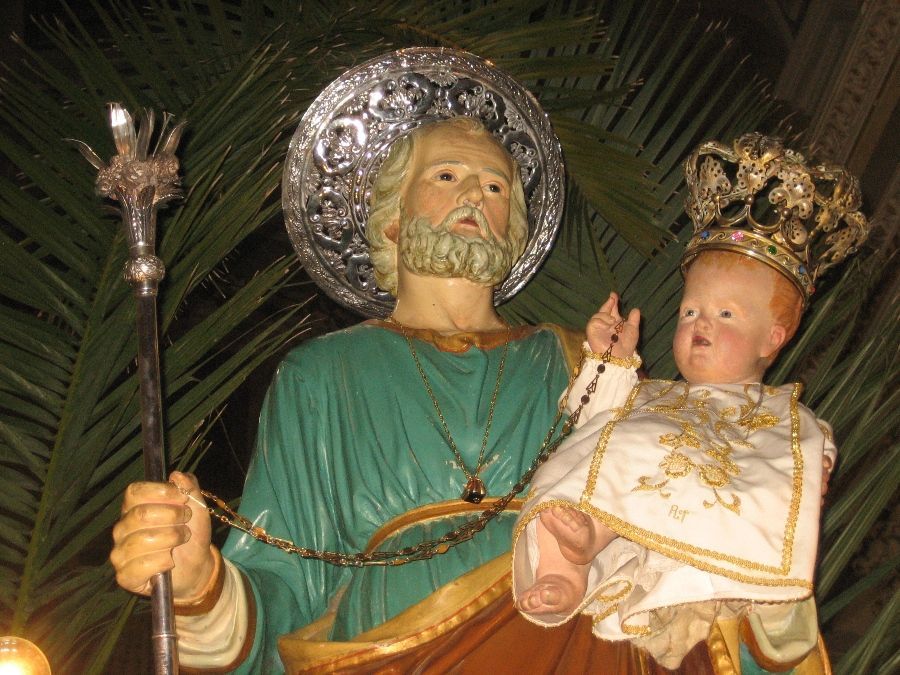
March 19th Saint Joseph
Meeting in Piazza CM Carafa for the so-called "mangiata" of the Holy Family. Two orphans, who impersonate Mary and the adolescent Jesus, and an old man, in the guise of St. Joseph, have lunch on a stage where, later, the gifts offered by the population are auctioned. The proceeds are donated to the orphans drawn.
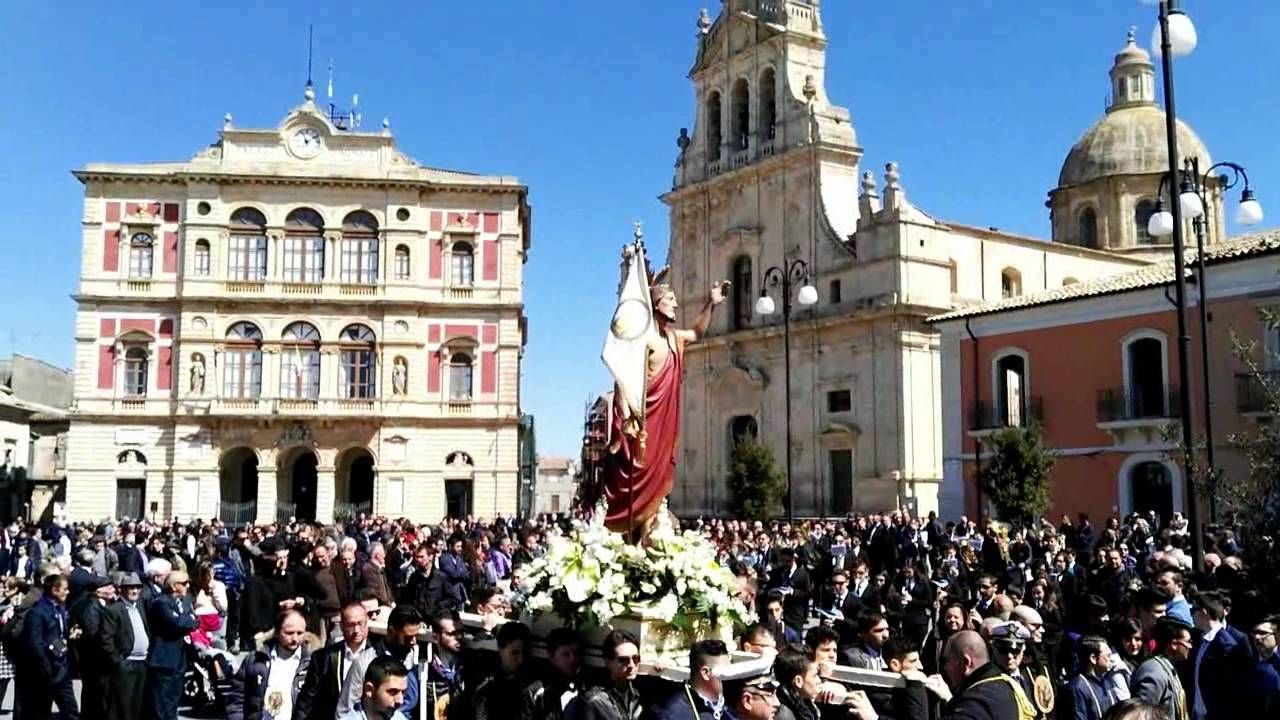
Holy Week
The celebrations begin with the blessing of the palms in the Church of the Holy Spirit, followed by the service of the opening of Christ at the Column. Procession of Christ at the Column on Wednesday evening. Altars of the deposition set up on Thursday evening. Procession with simulacra on Friday evening. Confraternities protagonists of the Holy Week. Silk banners embroidered with gold arabesques.
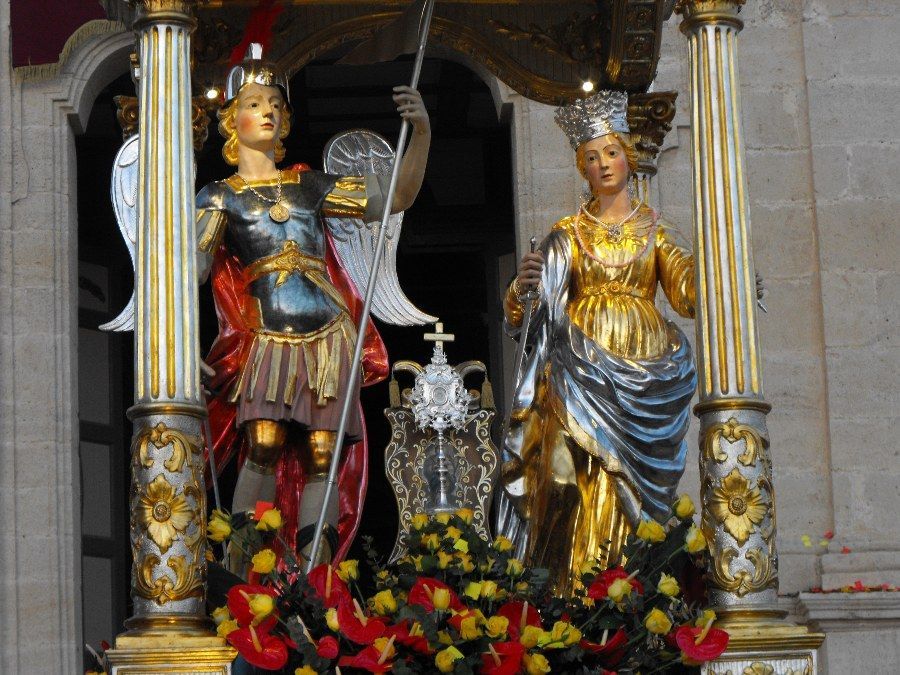
Feast in honor of the Patron Saints, St. Michael the Archangel and St. Catherine.
Celebration of the feast in honor of the Patron Saints, St. Michael the Archangel and St. Catherine. In addition to the religious feast, which takes place with a solemn Triduum in the Mother Church, there is a procession of simulacra through the city streets. During the three days of celebrations, various folkloristic events and entertainment shows follow one another. The feast opens and closes with spectacular fireworks displays.
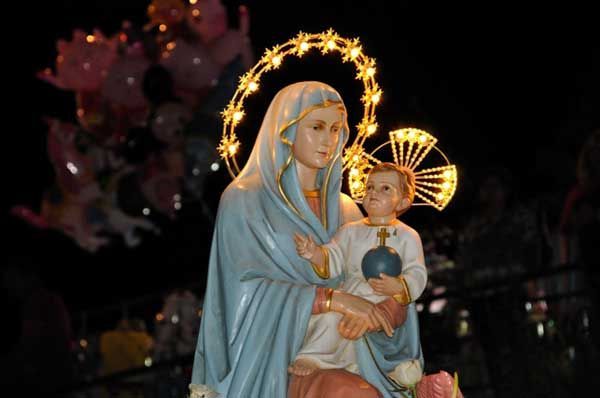
Feast of Our Lady of the Piano
Every year on September 6, 7 and 8 in Grammichele the Madonna del Piano is celebrated at the Sanctuary of Santa Maria Maggiore, which miraculously remained standing after the earthquake of 1693. During the celebrations there are religious events, night processions and popular culinary and folkloristic traditions. There are night processions, the sausage festival and the journey of the "virgineddi". The highlight is the night procession on September 8, with candles and torches that illuminate the path.
March 19th Saint Joseph
Meeting in Piazza CM Carafa for the so-called "mangiata" of the Holy Family. Two orphans, who impersonate Mary and the adolescent Jesus, and an old man, in the guise of St. Joseph, have lunch on a stage where, later, the gifts offered by the population are auctioned. The proceeds are donated to the orphans drawn.
Holy Week
The celebrations begin with the blessing of the palms in the Church of the Holy Spirit, followed by the service of the opening of Christ at the Column. Procession of Christ at the Column on Wednesday evening. Altars of the deposition set up on Thursday evening. Procession with simulacra on Friday evening. Confraternities protagonists of the Holy Week. Silk banners embroidered with gold arabesques.
Feast in honor of the Patron Saints, St. Michael the Archangel and St. Catherine.
Celebration of the feast in honor of the Patron Saints, St. Michael the Archangel and St. Catherine. In addition to the religious feast, which takes place with a solemn Triduum in the Mother Church, there is a procession of simulacra through the city streets. During the three days of celebrations, various folkloristic events and entertainment shows follow one another. The feast opens and closes with spectacular fireworks displays.
Feast of Our Lady of the Piano
Every year on September 6, 7 and 8 in Grammichele the Madonna del Piano is celebrated at the Sanctuary of Santa Maria Maggiore, which miraculously remained standing after the earthquake of 1693. During the celebrations there are religious events, night processions and popular culinary and folkloristic traditions. There are night processions, the sausage festival and the journey of the "virgineddi". The highlight is the night procession on September 8, with candles and torches that illuminate the path.
March 19th Saint Joseph
Meeting in Piazza CM Carafa for the so-called "mangiata" of the Holy Family. Two orphans, who impersonate Mary and the adolescent Jesus, and an old man, in the guise of St. Joseph, have lunch on a stage where, later, the gifts offered by the population are auctioned. The proceeds are donated to the orphans drawn.
Holy Week
The celebrations begin on Palm Sunday in the church of the Holy Spirit, with the blessing of the palms and olive branches, carried by the faithful and the function of the opening of Christ at the Column, (a papier-mâché statue dating back to the 19th century). On Wednesday evening, the procession of Christ at the Column takes place. On Thursday evening, Altars of the Deposition, commonly called Sepulchres, are set up in all the churches. On Friday evening, the faithful and brotherhoods accompany the evocative procession, carrying the simulacra of the dead Jesus and Our Lady of Sorrows through the streets of the town. The rites of Holy Week feature the Confraternities of the SS. Sacramento and of the Souls in Purgatory, already present in Occhiolà in the 17th century. Of particular value are their banners, made of silk cloths, embroidered with gold arabesques, suspended from a three-meter long pole.
Feast in honor of the Patron Saints, St. Michael the Archangel and St. Catherine.
Celebration of the feast in honor of the Patron Saints, St. Michael the Archangel and St. Catherine. In addition to the religious feast, which takes place with a solemn Triduum in the Mother Church, there is a procession of simulacra through the city streets. During the three days of celebrations, various folkloristic events and entertainment shows follow one another. The feast opens and closes with spectacular fireworks displays.
Feast of Our Lady of the Piano
Every year on September 6, 7 and 8 in Grammichele the Madonna del Piano is celebrated at the Sanctuary of Santa Maria Maggiore, which miraculously remained standing after the earthquake of 1693. During the celebrations there are religious events, night processions and popular culinary and folkloristic traditions. There are night processions, the sausage festival and the journey of the "virgineddi". The highlight is the night procession on September 8, with candles and torches that illuminate the path.